Account-protection guidance concerns U.S. accounts where stated. Tax, regulatory and account rules vary by country; a calculation alone does not establish local eligibility or treatment.
Your starting point
Choose the decision you’re preparing for.
Choose one route. You can move between them as your needs change.
8 guides · About 34 min total reading
Start with the essentials
Understand accounts, costs and order types before making a first investment.
Compare two investments using the same hypothetical starting balance and gross return. Change the second annual fee and see how much of the ending-value difference comes from that one assumption.
Here, both begin with $10,000 and earn a hypothetical 6% each year for 20 years. Investment A has a 0.20% annual fee. The simplified model subtracts the annual fee from the gross return before compounding.
Where this math stops: A constant return is an illustration. Real returns vary, fees can be charged differently, and this preview excludes contributions, taxes and inflation. Cheaper funds can also hold different investments.
Fictional examples with explicit inputs, rather than claims about an untested historical strategy.
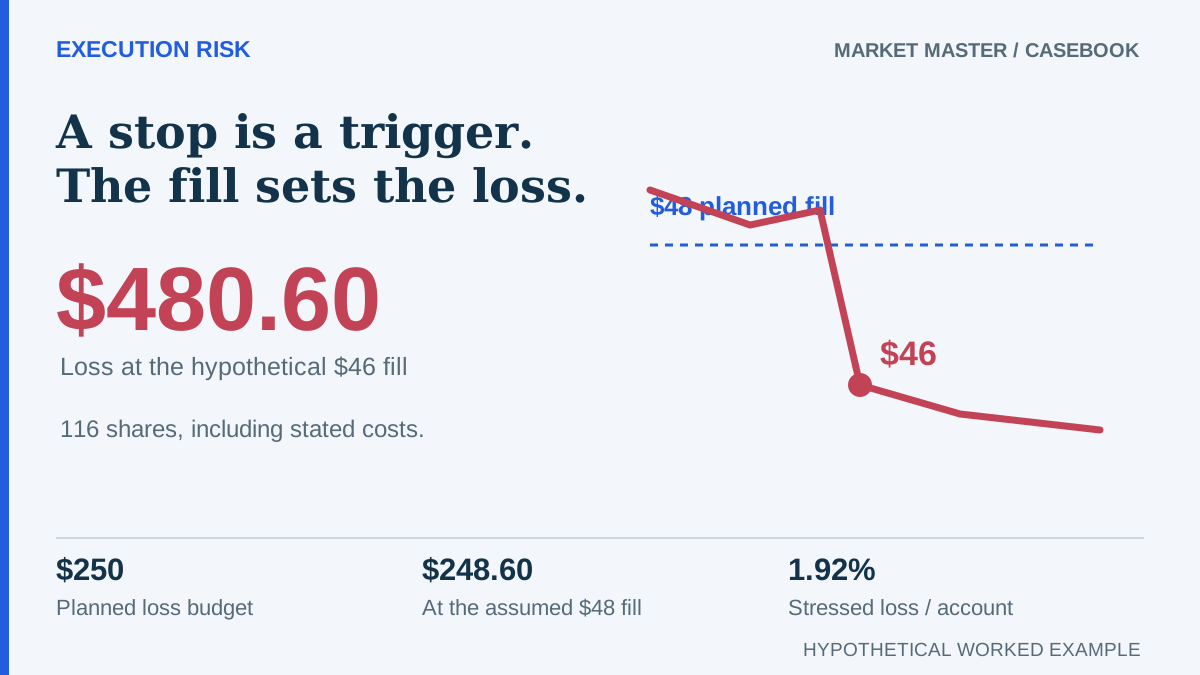
The exit fills below the stop.
A planned position fits a loss budget only under its assumed fill and cost inputs. If the market gaps past that price, the same share count can produce a larger loss. Trace the difference between a stop trigger and an actual execution.
Common mistake: treating the stop price as a guaranteed loss limit.
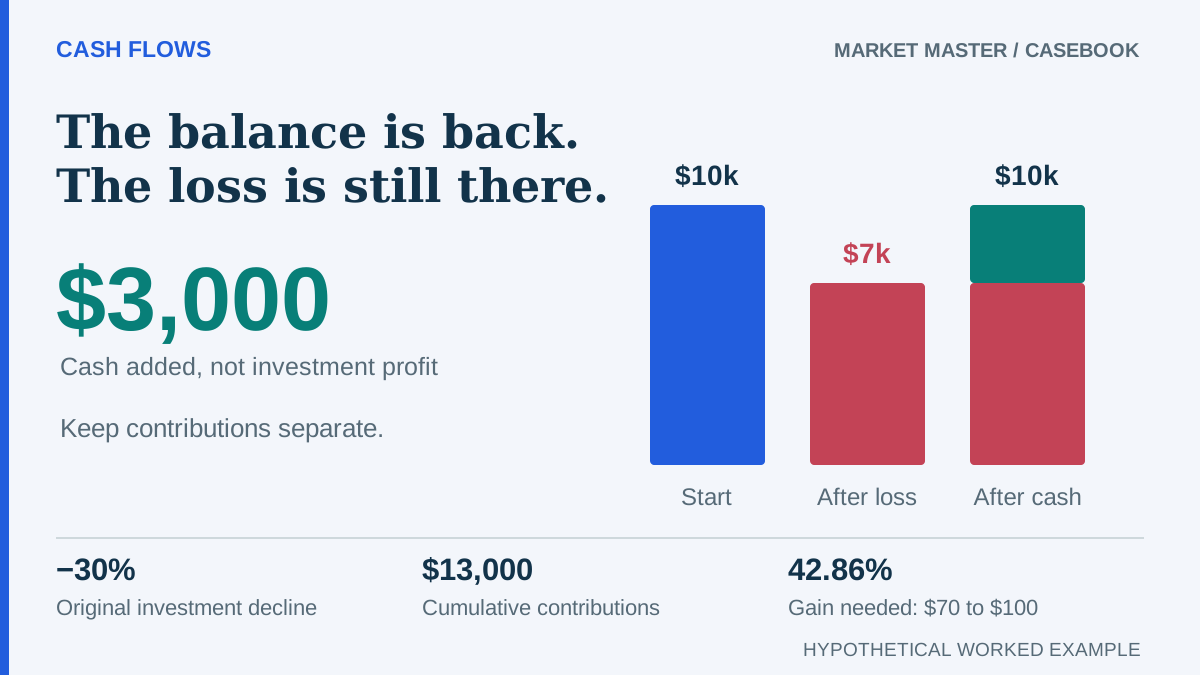
A deposit adds money to an account without reversing the earlier investment loss. Separate the external cash flow from the return, then compare what an account balance and a time-weighted result actually describe.
Common mistake: reading a restored balance as proof of recovered performance.
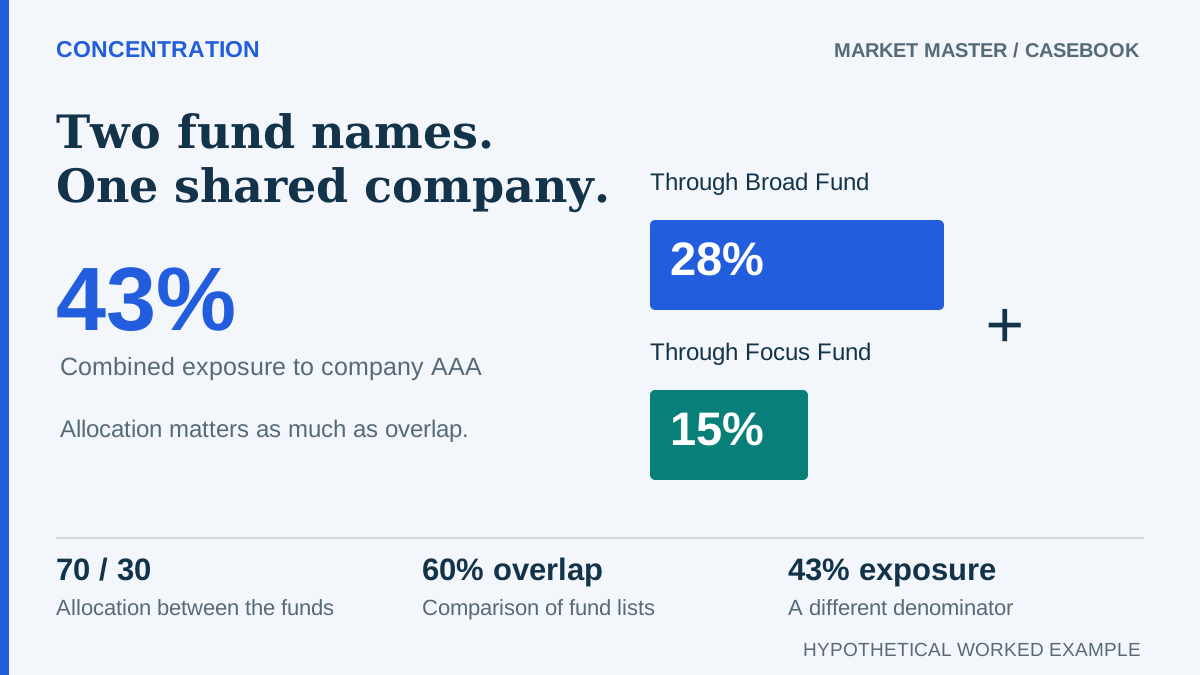
Compare the holdings and the amounts allocated to each fund. Pairwise overlap describes the lists you supplied; combined company exposure also depends on your portfolio weights. Partial holdings leave a portion of that picture unknown.
Common mistake: counting fund names instead of looking through to the holdings.
For the underlying execution distinction, see the SEC’s guide to stop orders. Each linked casebook retains its own inputs, calculations and references.
Decision hygiene
Write the rule before the market tests it.
A price move can make an old decision feel urgent. Before reacting, write down the reason for owning the investment, the evidence that supports that reason and the observation that would make it weaker. Then separate a change in the evidence from a change in how the price makes you feel.
Look for a credible counterargument as well as a confirming one. If you cannot name anything that would change your view, the research question may be too vague to test. A short decision record makes those conditions visible without turning a checklist into an automatic buy or sell rule.
For portfolio maintenance, distinguish a scheduled review from an instruction to trade. A new contribution can reduce an allocation gap, while costs, cash needs and local tax treatment may change the decision. Record the figures you checked and why you acted or waited.