

A euro quote makes an ETF easy to buy with euros. The quote alone tells you little about whether a stronger euro will help or hurt your return. To answer that, find out what the fund holds, what currency its performance is reported in, and whether the share class follows a currency hedge. Those are three separate facts you can check before comparing returns.
Work through a currency move in euros
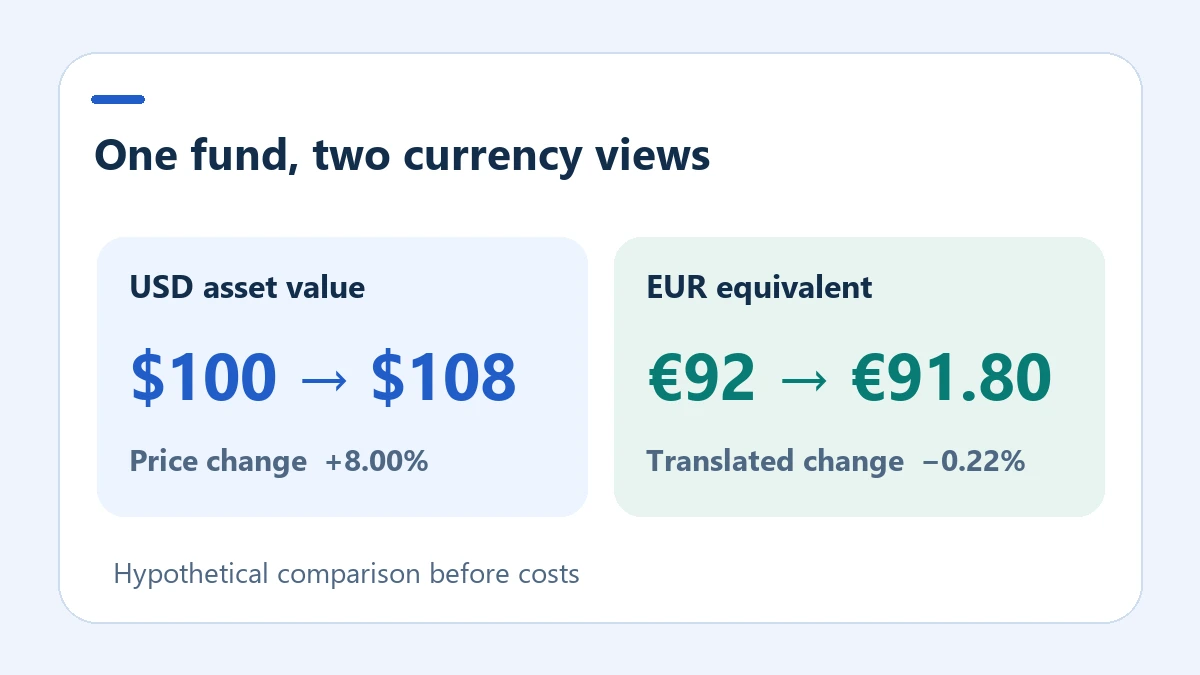
Imagine an unhedged fund holds only a USD asset. The asset rises from $100 to $108 over the interval. At purchase, one dollar is worth €0.92. At the end, one dollar is worth €0.85. Those are euros per dollar, so you multiply the dollar value by the exchange rate to translate it into euros.
| Observation | USD asset value | EUR per USD | EUR equivalent |
|---|---|---|---|
| Start | $100 | €0.92 | €92.00 |
| End | $108 | €0.85 | €91.80 |
The asset gained 8% in dollars, but its euro equivalent fell about 0.22%. The exact euro return is (108 ÷ 100) × (0.85 ÷ 0.92) − 1. That multiplication matters: the new exchange rate applies to the entire ending asset value. Subtracting the currency change from the dollar return approximates the result and can give the wrong sign near break-even. In this example the exact break-even closing exchange rate is €92 ÷ $108, about €0.85185 per dollar.
If the exchange-rate source instead quotes dollars per euro, divide the dollar value by that rate, or invert the rate before using this example’s formula. Write the currency units next to both numbers before building the calculation. A spreadsheet can otherwise show a plausible looking result produced using the wrong convention.
Check what kind of currency label you are reading
- Listing currency: Find the currency used to quote that exchange listing. It matters for order settlement and may affect the broker’s conversion charges.
- Fund or share class reporting currency: Find the currency used for the stated NAV or performance series. Take care when comparing one table in euros with another in dollars.
- Underlying exposure: Check holdings and the fund’s strategy. A portfolio can contain assets with exposures to several currencies, and a company can earn or spend in currencies other than the one in which its shares trade.
- Hedging policy: Match the share class identifier to the issuer’s documents. Check what exposure is targeted, what currency it is hedged toward and how often the hedge is adjusted.
In a simple translation exercise, a euro listing and a dollar listing representing the same unhedged share class reflect the same underlying portfolio. At a common instant, their exchange prices can still differ after translating currencies because of spreads and market conditions. Quotes taken at different market closes add another difference. Match the share class first, then compare the same observation time and the same currency. A different ticker does not automatically mean a different portfolio.
What a hedge changes in the comparison
A hedge can reduce the effect of currency moves specified in the share class policy. The realised result can still differ because of hedge timing, changing portfolio weights, transaction costs and the pricing of forward contracts. A hedged share class also retains the underlying market risk. As an example of the distinction, an issuer’s description of a euro-hedged global ETF states the currency being targeted and how often the hedge is reset. Read the relevant fund documents for a specific product rather than extrapolating that example to every fund.
Keep distributions and conversion costs separate
The worked example uses a price change alone. If the fund distributes cash, add the cash converted using the applicable rate when it was received, or use a clearly labelled total-return series that already models reinvestment. Doing both double counts the distribution. If you buy a foreign-currency listing with cash already held in that currency, there may be no broker conversion on that particular order. Your result measured in euros still changes with the exchange rate. That is why broker fees and the currency exposure of an investment belong in separate columns.
Before drawing a conclusion, make a two-row comparison with the fund identifier, listing currency, reporting currency, hedge target, observation time and return methodology. Add your own broker’s exchange charges when comparing the cost of two listings. For a separate check on underlying company concentration, use the ETF overlap tool with holdings from the same date. It addresses a different exposure question, so keep the currency calculation in its own column.
References and method
Use the references to check the factual explanations. Calculations and interpretations are Market Master’s own unless attributed otherwise. The assumptions and limits are stated alongside the relevant example.
Supporting references (3)
SEC Investor.gov on international investing ↗www.investor.gov
SEC Investor Bulletin on ETFs ↗www.investor.gov
iShares currency-hedged share class example ↗www.ishares.com
Published by Market Master, an owner-operated publication led by Andrejus S. Editorial responsibility and production methods · Report a correction.